Buying Our First ETF
Let’s be honest with each other.
More than 95% of investors underperform the market.
The main reasons?
- Trading too much (costs harm your return)
- Trying to time the market
- Making emotional investment decisions
- Lack of patience
- …
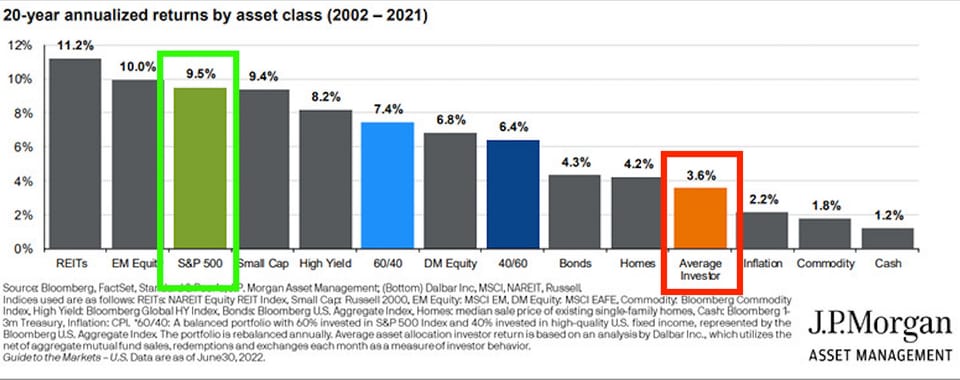
This study by JP Morgan found that the average investor earned an annual return of 3.6%, while the S&P 500 returned 9.5% over 20 years.
That's a difference of 5.9%!
We truly believe that some investors can do better than the market, but most would do better if they invested passively.

Everyone should invest
The beautiful thing about investing passively? Everyone can do it.
And everyone should.
Investing in stocks is the best way to create wealth in the long term.
If you invest $250 monthly for 40 years you’ll be a millionaire (assumption: return of 9%/year).

This number should be adjusted for inflation but you get the point.
While in the short term it’s risky to invest in stocks, it’s risky to not invest in stocks in the long term.
When you invest for at least 10 years, you have a 97% chance of making money:

If you don’t want to spend too much time on researching stocks, ETFs are a great option.
It allows you to invest while only spending 10 minutes a month.
Do you want to secure your financial future? Or do you know someone who does?
This ETF portfolio can really help.
How the portfolio will work
Each month, we will buy an ETF for $500.
For both the ETF portfolio and the individual stock portfolio, purchases will happen the day after the article is published.
Why?
I want to give loyal readers like you a chance to act first.
Partners of Compounding Dividends will always be able to make their trades before I do, after doing their own research.
The ETF we’ll buy tomorrow
- Has an attractive dividend yield of 3.4%
- Has grown its dividend by over 10% per year
- Has a 5-year earnings growth rate of 9.7%.
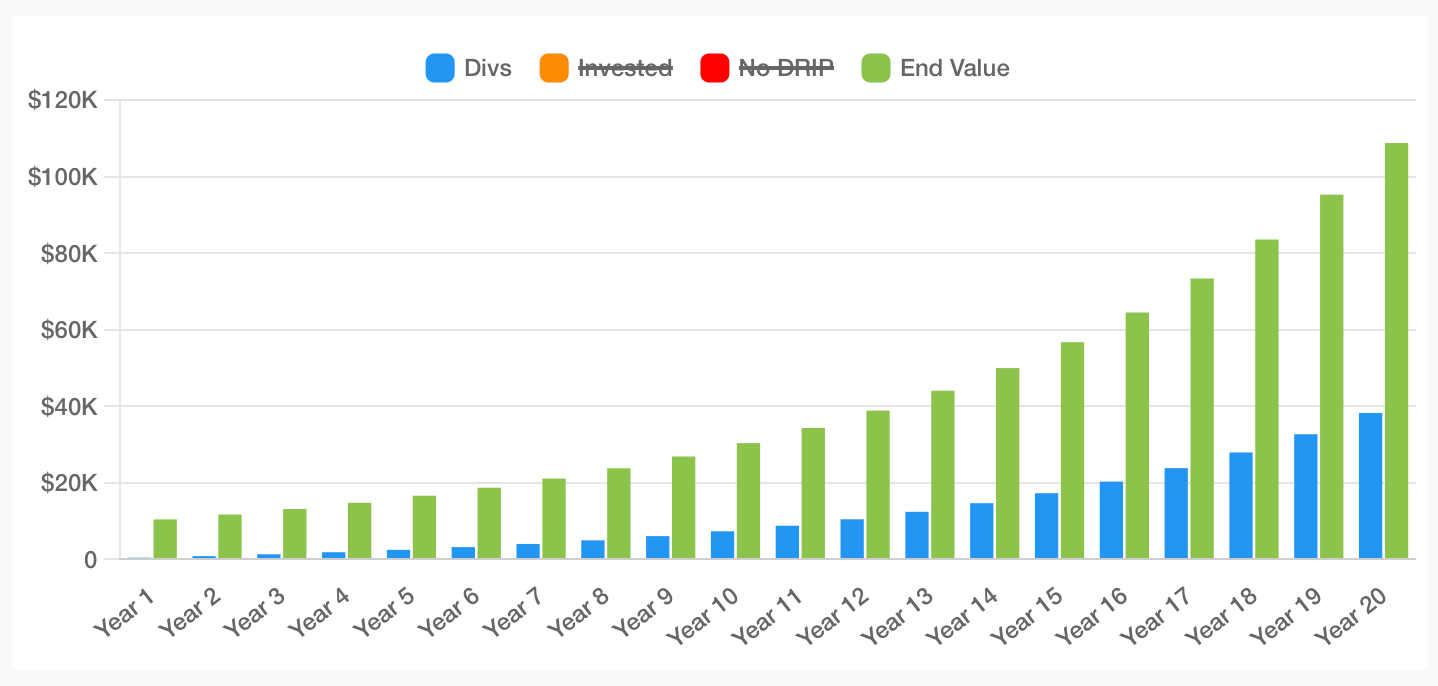
Here’s what $10,000 invested for 20-years looks like with those numbers:

Are you ready?
Let’s announce the first ETF we’ll buy within the ETF Portfolio.
ETF Portfolio
We will create 2 ETF Portfolios:
- American ETF Portfolio
- Non-American ETF Portfolio
Why?
People living in North America can’t buy ETFs trading outside North America and vice versa.
For Americans: Schwab US Dividend Equity ETF (SCHD)
- Ticker: SCHD
- ISIN: US8085241028
- Stock price: $28.3
SCHD is an ETF that tracks the Dow Jones U.S. Dividend 100 Index.
Dow Jones U.S. Dividend 100 Index
The index is made up of high-dividend-yielding stocks in the U.S. with a record of consistently paying dividends.
They screen based on:
- At least 10 years of dividend payments
- Free Cash Flow to total debt
- Return On Equity
- Dividend yield
- A five-year dividend growth rate
We love this balanced approach to yield, growth, and the quality of the companies.
Why SCHD?
The Schwab US Dividend Equity ETF gives you a high starting yield of around 3.5%.
This is 2x the dividend yield of the S&P 500 (1.3%).
It also has a strong history of dividend growth:
- 5-year dividend CAGR: 12.0%
- 10-year dividend CAGR: 9.8%
Using the historical numbers for SCHD, after 20 years, a $10,000 investment would be worth over $100,000.
You would have received almost $40,000 in dividend payments.
From now on, you’ll receive more than $5,500 in dividend payments every single year.
That’s a dividend yield of 55% based on your initial investment!
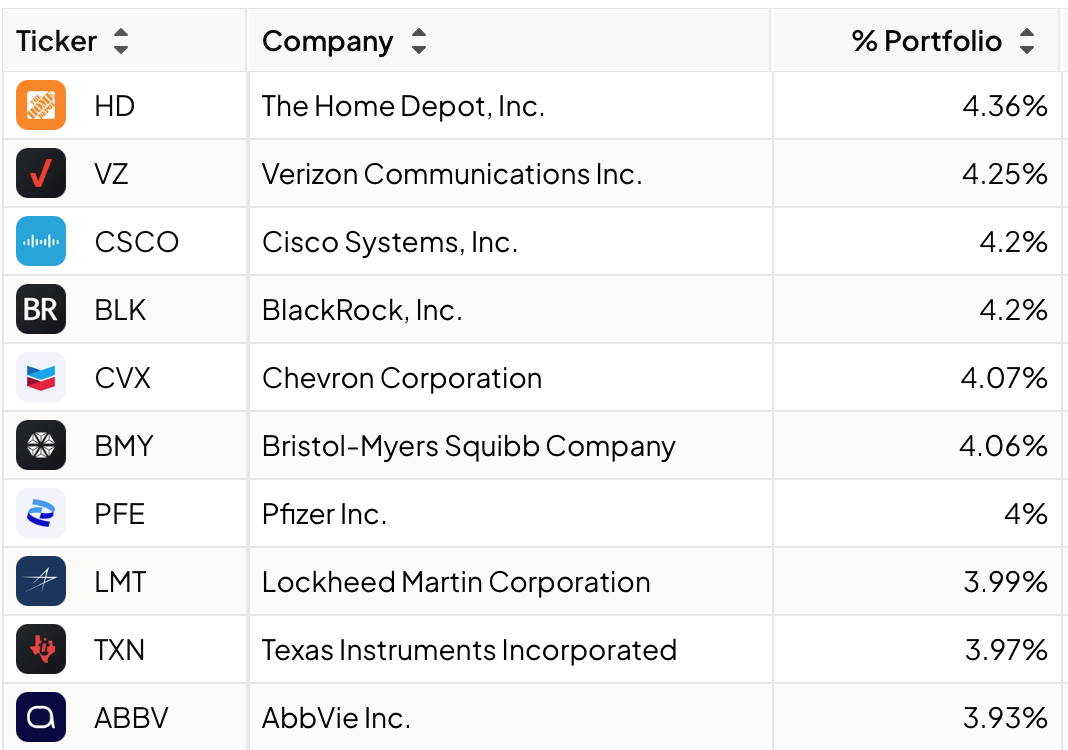
What are the largest positions within SCHD?
Here are the top 10 positions of SCHD:
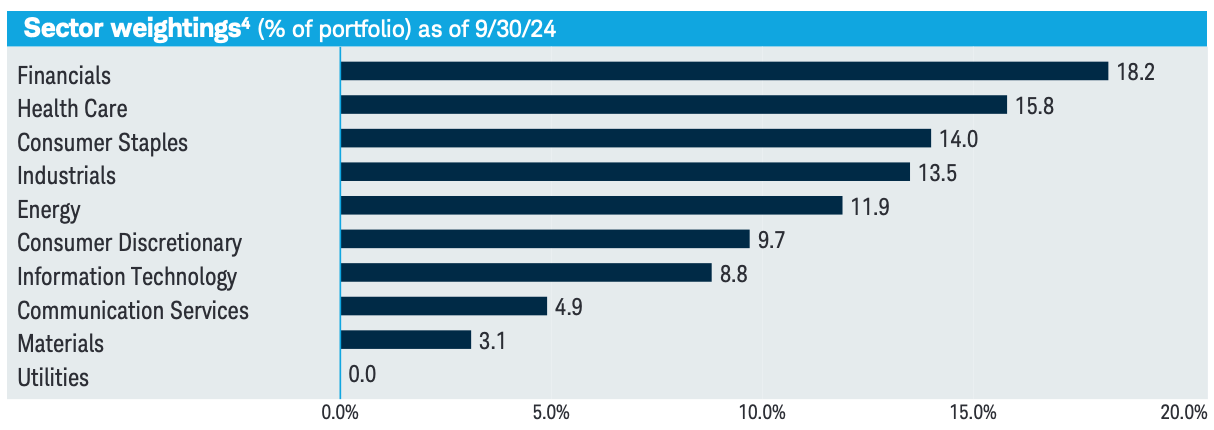
Sector Breakdown
The sector Financials has the largest weight within the ETF:
What are the costs for SCHD?
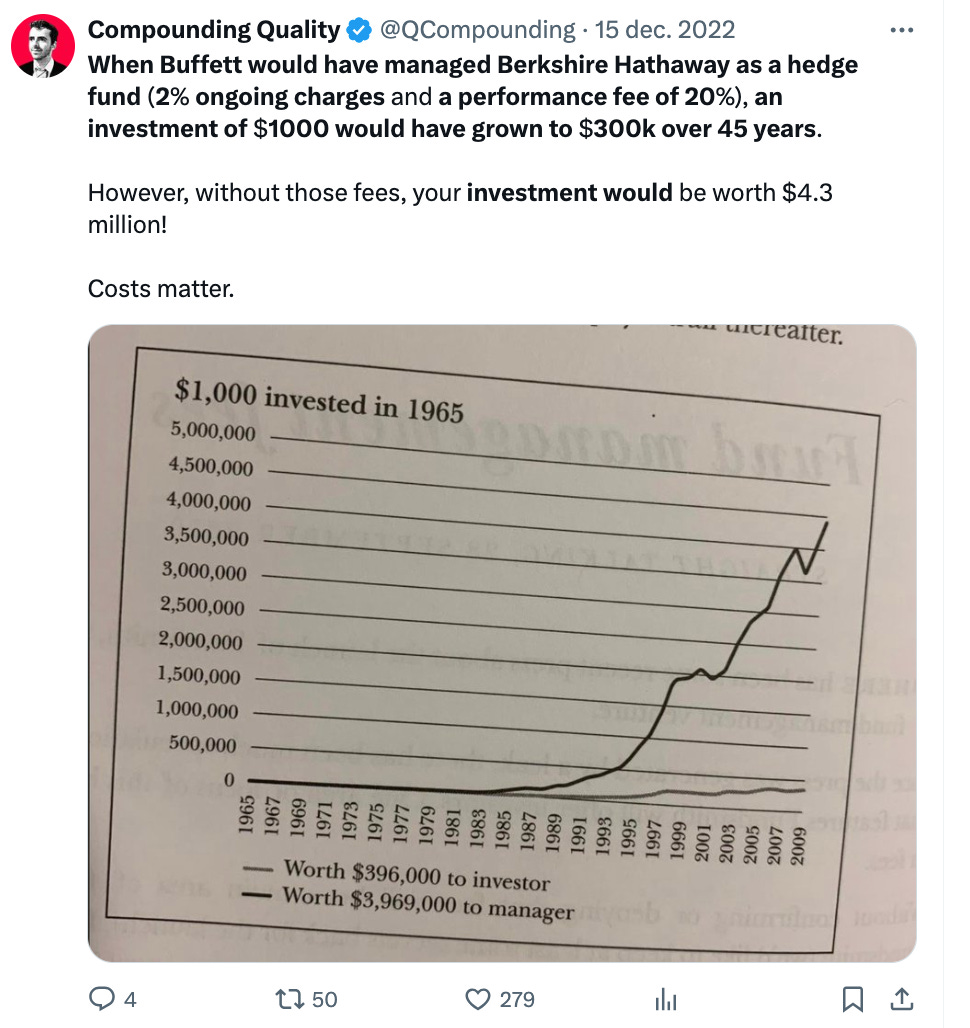
The Total Expense Ratio (TER) for SCHD is 0.06%.
This means you only pay 0.06% in costs per year.
It’s roughly 25x times less than what you’d pay for an Equity Fund at your local bank.
Is it a Physical or Synthetic ETF?
When investing in an ETF, choosing a Physical ETF instead of a Synthetic one is important.
What’s the difference?
- Physical ETFs: Buy the actual securities.
- Synthetic ETFs: Don’t buy the actual securities. They use derivatives to track the index.
SCHD is a Physical ETF.

For Non-Americans: iShares MSCI USA Quality Dividend ETF
This ETF is based on the MSCI USA Index, and includes large and mid-cap stocks.
It buys stocks with a higher dividend yield and better quality characteristics than the average company.
The approach of this ETF is very similar to the one of SCHD.
- Ticker: QDIV
- ISIN: IE00BKM4H312
- Stock price: $49
- TER (annual costs): 0.2%
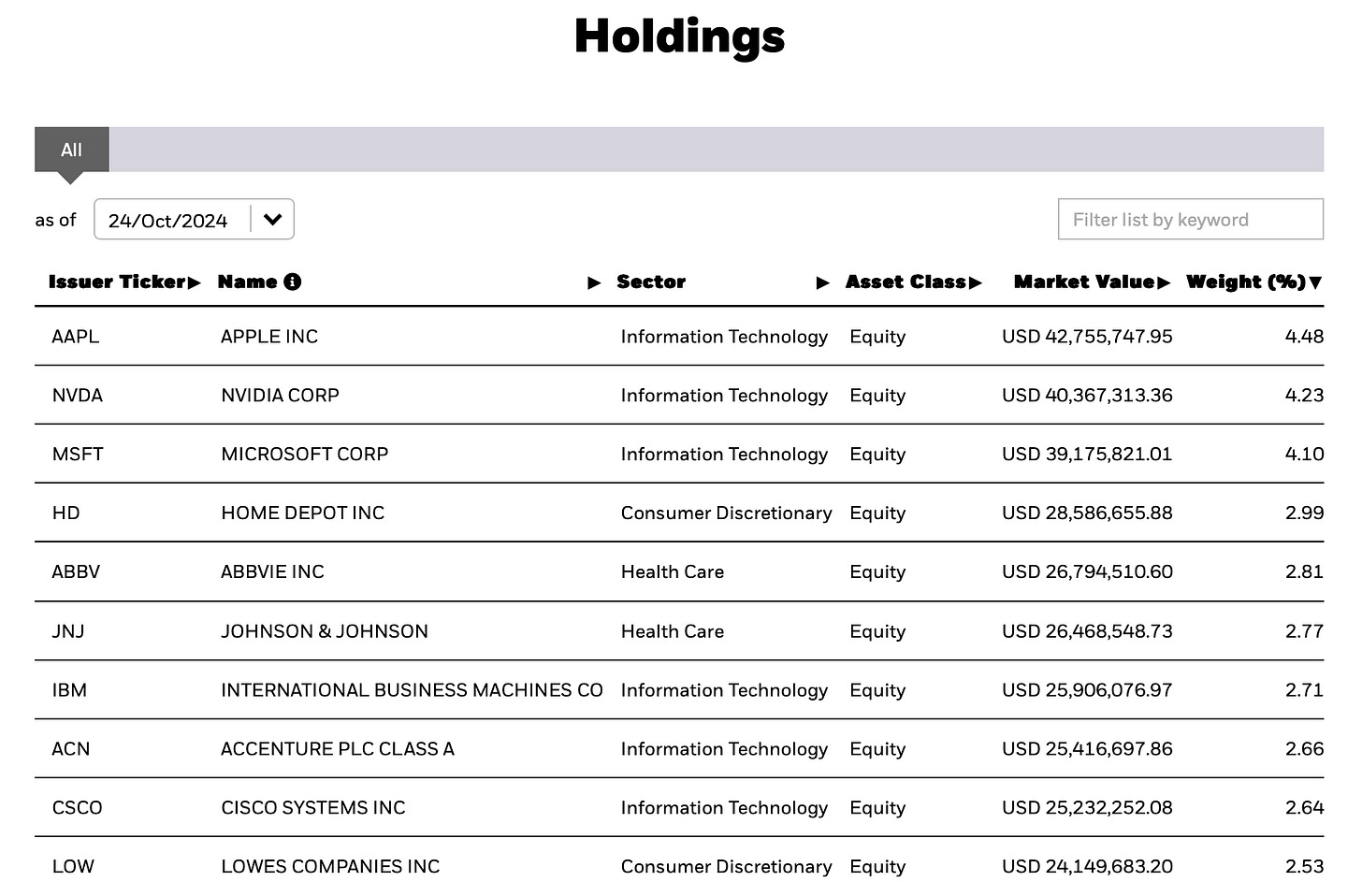
What are the largest positions of QDIV?
Here are the top 10 holdings:
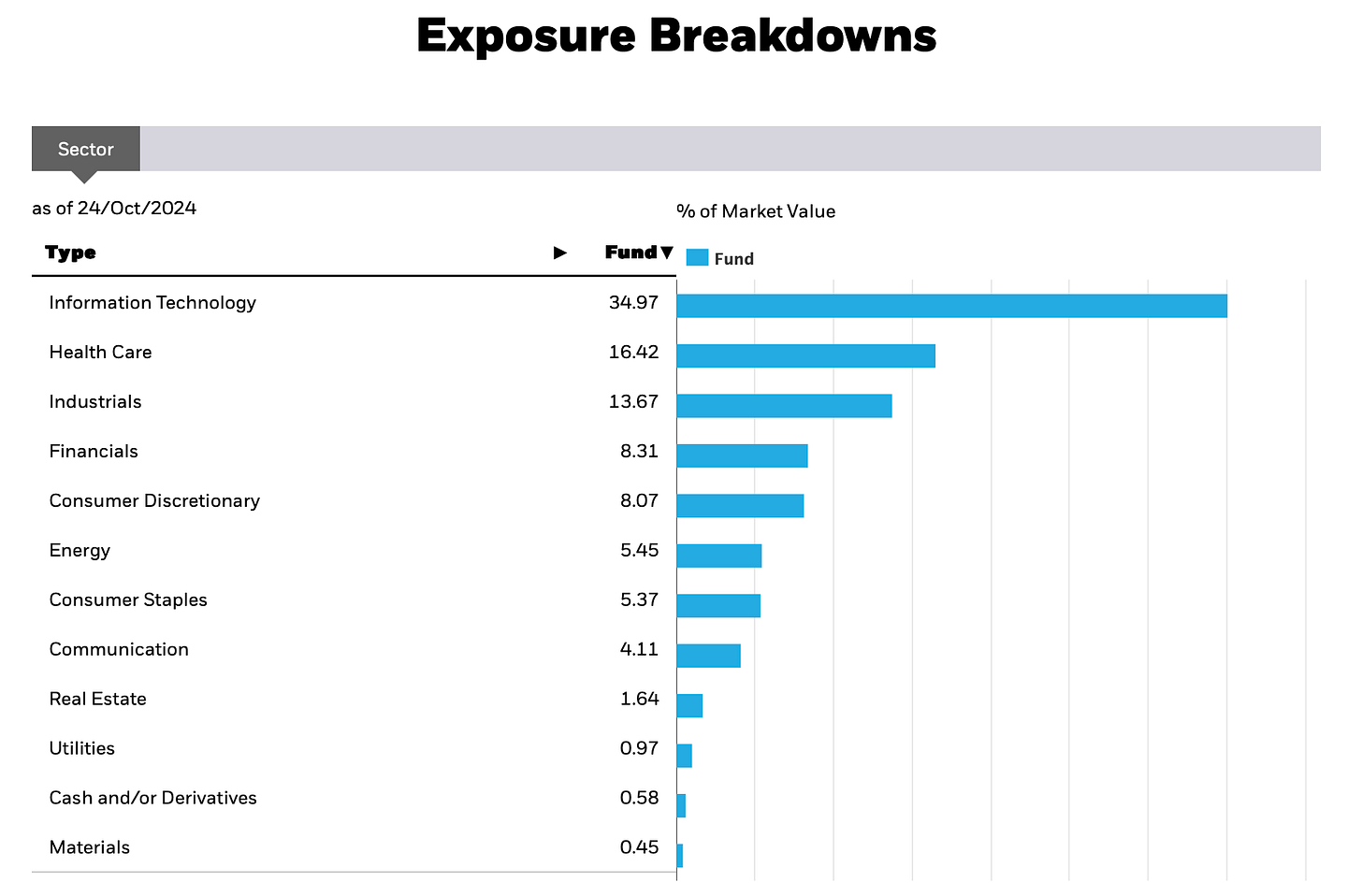
Sector Breakdown
The Information Technology sector has the highest weighting for QDIV:
Transaction
Tomorrow at the opening we will buy our first ETF:
Conclusion
Our first ETFs aim to balance starting yield, dividend growth, and the company's quality. They focus on US companies known for consistently raising their dividend payments.
This should provide good income growth and increase the value of your investment over time.
You can track the ETF Portfolio via This Spreadsheet:
One Dividend At A Time
TJ & Pieter

Used sources
- Interactive Brokers: Portfolio data and executing all transactions
- Finchat: Financial data